Thursday, July 15, 2010

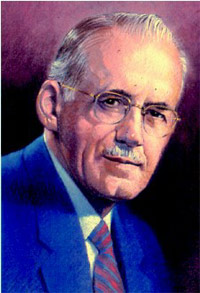
Thoughts From A.W. Tozer - Saints Often Walk Alone


 Excerpts from Man, the Dwelling Place of God


~~ GREETINGS SAINTS: The following by Tozer was especially meaningful to me for many reasons (which I will prayerfully share with you another time in the not too distant future). It was such a blessing, I had to share it with you. Be blessed in the knowledge of the LORD!

James J. Fire ~~

In the morning of the world (or should we say, in that strange darkness that came soon after the dawn of man's creation) that pious soul, Enoch, walked with God and was not, for God took him; and while it is not stated in so many words, a fair inference is that Enoch walked a path quite apart from his contemporaries.

Another lonely man was Noah who, of all the antediluvians, found grace in the sight of God; and every shred of evidence points to the aloneness of his life even while surrounded by his people.

Again, Abraham had Sarah and Lot, as well as many servants and herdsmen, but who can read his story and the apostolic comment upon it without sensing instantly that he was a man "whose soul was alike a star and dwelt apart"? As far as we know not one word did God ever speak to him in the company of men. Face down he communed with his God, and the innate dignity of the man forbade that he assume this posture in the presence of others. How sweet and solemn was the scene that night of the sacrifice when he saw the lamps of fire moving between the pieces of offering. There alone, with a horror of great darkness upon him, he heard the voice of God and knew that he was a man marked for divine favor.

Moses also was a man apart. While yet attached to the court of Pharaoh he took long walks alone, and during one of these walks while far removed from the crowds he saw an Egyptian and a Hebrew fighting and came to the rescue of his countryman. After the resultant break with Egypt he dwelt in almost complete seclusion in the desert. There, while he watched his sheep alone, the wonder of the burning bush appeared to him, and later on the peak of Sinai he crouched alone to gaze in fascinated awe at the Presence, partly hidden, partly disclosed, within the cloud and fire.

The prophets of pre-Christian times differed widely from each other, but one mark they bore in common was their enforced loneliness. They loved their people and gloried in the religion of the fathers, but their loyalty to the God of Abraham, Isaac and Jacob, and their zeal for the welfare of the nation of Israel drove them away from the crowd and into long periods of heaviness. "I am become a stranger unto my brethren, and an alien unto my mother's children," cried one and unwittingly spoke for all the rest....

There are some things too sacred for any eye but God's to look upon. The curiosity, the clamor, the well-meant but blundering effort to help can only hinder the waiting soul and make unlikely if not impossible the communication of the secret message of God to the worshiping heart.

Sometimes we react by a kind of religious reflex and repeat dutifully the proper words and phrases even though they fail to express our real feelings and lack the authenticity of personal experience. Right now is such a time. A certain conventional loyalty may lead some who hear this unfamiliar truth expressed for the first time to say brightly, "Oh, I am never lonely. Christ said, 'I will never leave you nor forsake you,' and, 'Lo, I am with you alway.' How can I be lonely when Jesus is with me?"

Now I do not want to reflect on the sincerity of any Christian soul, but this stock testimony is too neat to be real. It is obviously what the speaker thinks should be true rather than what he has proved to be true by the test of experience. This cheerful denial of loneliness proves only that the speaker has never walked with God without the support and encouragement afforded him by society. The sense of companionship which he mistakenly attributes to the presence of Christ may, and probably does, arise from the presence of friendly people.

Always remember: you cannot carry a cross in company. Though a man were surrounded by a vast crowd, his cross is his alone and his carrying of it marks him as a man apart. Society has turned against him; otherwise he would have no cross. No one is a friend to the man with a cross. "They all forsook him, and fled."

The pain of loneliness arises from the constitution of our nature. God made us for each other. The desire for human companionship is completely natural and right. The loneliness of the Christian results from his walk with God in an ungodly world, a walk that must often take him away from the fellowship of good Christians as well as from that of the unregenerate world. His God-given instincts cry out for companionship with others of his kind, others who can understand his longings, his aspirations, his absorption in the love of Christ; and because within his circle of friends there are so few who share his inner experiences he is forced to walk alone.

The unsatisfied longings of the prophets for human understanding caused them to cry out in their complaint, and even our Lord Himself suffered in the same way.

The truly spiritual man is indeed something of an oddity. He lives not for himself but to promote the interests of Another. He seeks to persuade people to give all to his Lord and asks no portion or share for himself. He delights not to be honored but to see his Saviour glorified in the eyes of men. His joy is to see his Lord promoted and himself neglected. He finds few who care to talk about that which is the supreme object of his interest, so he is often silent and preoccupied in the midst of noisy religious shoptalk. For this he earns the reputation of being dull and over-serious, so he is avoided and the gulf between him and society widens.

He searches for friends upon whose garments he can detect the smell of myrrh and aloes and cassia out of the ivory palaces, and finding few or none he, like Mary of old, keeps these things in his heart.

It is this very loneliness that throws him back upon God. "When my father and my mother forsake me, then the Lord will take me up." His inability to find human companionship drives him to seek in God what he can find nowhere else. He learns in inner solitude what he could not have learned in the crowd that Christ is All in All, that He is made unto us wisdom, righteousness, sanctification and redemption, that in Him we have and possess life's summum bonum (ultimate truth).

Two things remain to be said.

One, that the lonely man of whom we speak is not a haughty man, nor is he the holier-than-thou, austere saint so bitterly satirized in popular literature. He is likely to feel that he is the least of all men and is sure to blame himself for his very loneliness. He wants to share his feelings with others and to open his heart to some like-minded soul who will understand him, but the spiritual climate around him does not encourage it, so he remains silent and tells his griefs to God alone.

The second thing is that the lonely saint is not the withdrawn man who hardens himself against human suffering and spends his days contemplating the heavens. Just the opposite is true. His loneliness makes him sympathetic to the approach of the broken-hearted and the fallen and the sin-bruised. Because he is detached from the world he is all the more able to help it....

The weakness of so many modern Christians is that they feel too much at home in the world. In their effort to achieve restful "adjustment" to unregenerate society they have lost their pilgrim character and become an essential part of the very moral order against which they are sent to protest. The world recognizes them and accepts them for what they are. And this is the saddest thing that can be said about them. They are not lonely, but neither are they saints.

Monday, July 12, 2010

SMOKE SIGNAL - Emergent Authors & Their Errors


The following SMOKE SIGNAL in this posting FROM the MIND of FIRE is a concise, accurate and well written article by Diana King, a Sister in the LORD who produced it for the sake of Church Book Store employees that worked under her management.
Having read it, I asked if I could reproduce it here for my blog, and she was quite willing for me to do so.
And so, without further ado, here it is!
John Eldredge (pictured left) – and Rick Warren (right) Emergent Authors and Errors Within the Movement:

~ By Diana King

These two authors have a huge following but have ties to emergent church teaching. If you’re not familiar with the term, “emergent church”, I am including a definition for it.
Here are just a few errors in the emergent church movement (in bold print are statements made by ECM leaders in regular type are answers):

The world is radically changing and the church must radically change with it.
Emergents believe postmodernity represents a dramatic break with the past and that only an extreme transformation in the church can keep the church relevant and effective in this environment. What is needed, they say, is not just a change in methodology; we need a new kind of Christian.

Since the Church has been a culture bound for so long we must reexamine and question every belief and practice in the Church, finding new ways to define and express these.
Visiting Emergent blogs, one will find that absolutely any doctrine or moral standard can be questioned. It seems at times that Emergents are engaging in a complete reinvention of Christianity accompanied by a radical redefinition of Christian terms.

We have no foundation for any beliefs, therefore we cannot know absolute truth.
Critics of the Emergent Church movement insist that Emergents misrepresent epistemological foundationalism (the belief that we do possess some knowledge that serves as a basis for further knowledge) as requiring “bombproof certainty”, something contemporary foundationalists insist that the do not hold to. What contemporary foundationalists do believe is that we can possess real knowledge that is so certain it requires extraordinary evidence to refute it.

D.A. Carson points out that emergent post-foundationalism is based upon yet another of their false antitheses, saying “In effect the antithesis demands that we be God, with all of God’s omniscience, or else forever be condemned to knowing nothing objective for sure.”

Additionally, emergents fail to consider the scriptural teaching of faith as something God-given which does possess supernaturally certain knowledge (MATT 21:21; EPH 2:8; HEB 11:1). Emergents do not seem to realize that critiquing secular foundationalism is not the same as critiquing Evangelical foundationalism.

In A New Kind of Christian, Brian McLaren’s fictional altar ego, Neo, says even Scripture is neither authoritative (in a ‘modern’ sense) nor a foundation for faith.

Since we cannot know absolute truth, we can only experience what is “true” for our communities.

Postmodern philosophers and theologians insist that truth is only known and validated within communities (“There are no ‘Meta-narratives’ [narratives, or ideas or concepts that reach beyond local applications; thus in a sense, truths that are universal and, or absolute] only local narratives”). While this implies that truth is culturally relative and that true cross-cultural communications is impossible (those outside a community must first join a community before they can understand the community’s ideas), postmodern authors communicate to people of various communities simultaneously, apparently expecting them to all equally understand the intent.

Since we cannot know absolute truth we cannot be dogmatic about doctrine.
Emergents see orthodoxy as “generous”, that is, inclusive of many beliefs that Christians have historically thought to be aberrant or heretical. Many leading emergents echo McLaren’s refusal to assert Christianity’s superiority to other world religions.

Since we cannot know absolute truth we cannot be dogmatic about moral standards.
Absolute stands on issues such as homosexuality are viewed as obsolete. Activities such as drinking, clubbing, watching sexually explicit movies and using profanities are seen by some emergents as opportunities to show those who are not part of the Christian community that postmodern Christians do not think they are better than them through any sense of moral superiority.

Since we cannot know absolute truth, dogmatic preaching must give way to a dialogue between people of all beliefs.
Emergent Christians do not posture themselves before the world as though they were the light and the world were in darkness. Instead of “preaching” to the “lost” they join in “conversation” with people of various beliefs. Conservative Evangelicals seem not to be truly welcome to contribute their distinctive content to this conversation since they represent the old, rotting corpse of “modernism”.

Since propositional truth is uncertain, spiritual feeling and social action make up the only reliable substance of Christianity.
Emergents consider propositional truth a “modern” (and thus outmoded) fascination. Postmoderns think and communicate in narratives. Since the pursuit of truth is portrayed as a never ending journey with no solid starting point, they consider the only legitimate measuring rods of Christianity to be experience and good works. Without a solid footing in revealed truth, however, emergents have no firm foundation for knowing which experiences are valid and which works are good (something they don’t seem to notice).

To capture a sacred feeling we should reconnect with ancient worship forms.
Trappings such as burning candles and events such as silent retreats are popular in the movement. Embracing these premodern forms further breaks their connection with “modern” Christianity.

Since sublime feeling is experienced through outward forms, we should utilize art forms in our worship.
Many participants in the movement see appreciating art for art’s sake as a spiritual experience.
Through conversation with them, “outsiders” will become part of our community, and then be able to understand and believe what we teach.

The postmodern approach is not to try to persuade people to believe, it is to try to befriend people into joining. This is commonly expressed as Robert Webber does when he says, “People in a postmodern world are not persuaded to faith by reason as much as they are moved by faith by participation in God’s earthly community.” There is a false antithesis in such statements however. We do not have to choose between a purely cerebral attempt to talk others into believing correctly on the one hand and offering an open, unqualified invitation to our group on the other. The Bible teaches us to proclaim the gospel message with reliance upon the Holy Spirit to empower, illuminate and convict (1 COR 2:10-16; 1 THESS 1:9. When such proclamation is absent, as it is in the Emerging Church movement, there is no prophetic voice coming from the church calling sinners to repent and believe the Gospel (ACTS 2:38; 16:30-32).

All are welcome to join the “conversation” as long as they behave in a kind and open minded manner.
Emerging believers reject any posture which hints at exclusivism. Dogmatic Evangelicals, however, are not treated as kindly in the conversation as others are (something that many emergents admit).

The ultimate goal is to make the world a better place.
The Emerging Church movement envisions a utopia in which the oppressed of the world are free, the poor are no longer impoverished and the environment is clean. This paradise is achieved through social activism. Many emergent leaders think it is selfish folly to love for the return of Christ Jesus.

The accomplishing of all the above is seen by those in the movement as evidence that the Church is emerging to reach the culture, adapting to it. Critics of the movement see these things as signs that the Church is submerging into the culture, being absorbed by it.

From SOUTHERN VIEW CHAPEL - Learing Truth, Living Truth, we have the following:

Links on John Eldredge and his books – Wild at Heart and Captivating

THINK ON THESE THINGS Articles: WILD AT HEART - Pt 1

THINK ON THESE THINGS Articles: WILD AT HEART - Pt 2

Rick Warren and his book – The Purpose Driven Life.

THINK ON THESE THINGS Articles: The Purpose Driven Life - An Evaluation: Pt 1

Saturday, July 10, 2010

EPHESIANS: Aliens No More - One In Christ - CH. 2:11-22

We now continue in our study of the book of Ephesians, and will conclude chapter two. Last time we ended at vs. 10, and so we will pick it up at vs. 11 and on to the end (vs.22).

There is a lot of controversy today in our government and our nation regarding illegal aliens, and there is a push for amnesty among these; that with a stroke of a pen, some 18 million illegals could become citizens without due process. Without touching this extremely hot topic, I simply use it to illustrate a point:

We were once strangers, aliens as it were to God; truly alienated from God, separated from the Almighty by our sin (ISAIAH 59:2). Yet we have become citizens of His glorious kingdom, indeed - born into the family of God and forming an entirely new race, a new nation and a new life unto eternity! And this was conducted not with some legal contrivance and the stroke of a pen, but rather by the sacrifice of Jesus Christ our LORD! Not with ink on some legal document, but by the blood of the Lamb on a Cross!

Friday, June 18, 2010

Introducing: SMOKE SIGNALS - The KING Returns: In the flesh?


Greetings All:

This is the very first of (hopefully) many, many more 'Smoke Signals'. Small, simple messages with big impact. Also be looking for 'Crimson Caplets' (those are easier to swallow) on The RED PILL Consortium!


The word 'maranatha' means, "the LORD comes" or "the LORD is coming" and this is the blessed Hope of the church (TITUS 2:13)! Yet there are some in the ranks of Christendom that state that the LORD's coming is only in a spiritual sense; they claim that He is not physically going to return to this world. Many who espouse such a belief also believe in amillennialism, that is, there is no actual Millennial age in which Christ Jesus will reign as King over Israel as her Messiah (most certainly contrary to 2 SAMUEL 7 and PSALM 89, as well as LUKE 1:31-33 and ROMANS 11:26).

Yet what does the Word say regarding the coming of the LORD? Let's look at some scriptures:

LUKE 24:36
And as they thus spake, Jesus himself stood in the midst of them, and saith unto them, Peace be unto you. But they were terrified and affrighted, and supposed that they had seen a spirit. And he said unto them, Why are ye troubled? and why do thoughts arise in your hearts? Behold my hands and my feet, that it is I myself: handle me, and see; for a spirit hath not flesh and bones, as ye see me have.

So we know that the LORD resurrected with a body that was tangible; He was not merely a spirit, but possessed both flesh and bone (note: no blood however, that was all shed for you and me). Yet one that enjoyed certain properties like appearing suddenly in closed rooms, while still able to eat food (LUKE 24:41-43).
From that point to the ascension there is no indication that the LORD 'shed' this body, and became only a spirit; therefore we can rightly assume He ascended into heaven in His glorified body -

ACTS 1:9-11
And when he had spoken these things, while they beheld, he was taken up; and a cloud received him out of their sight. And while they looked stedfastly toward heaven as he went up, behold, two men stood by them in white apparel; Which also said, Ye men of Galilee, why stand ye gazing up into heaven? this same Jesus, which is taken up from you into heaven, shall so come in like manner as ye have seen him go into heaven (emphasis mine).
Note that the angels specify that the LORD is going to return in the same manner in which He ascended into heaven; in a glorified body (See also ZECH 12:10).

Paul speaks of the difference between a body that is corrupt and that which incorrupt, a body that is glorified and one that is in dishonor -

1 COR 15:42
So also is the resurrection of the dead. It is sown in corruption; it is raised in incorruption: It is sown in dishonour; it is raised in glory: it is sown in weakness; it is raised in power: It is sown a natural body; it is raised a spiritual body. There is a natural body, and there is a spiritual body.

Take care to observe that while the body is sown a natural one, it's raised a spiritual body: not merely a spirit, but a spiritual body! Paul states there are two kinds of bodies: natural ones and spiritual ones!

Some that support that Christ Jesus no longer possesses a body but is now returned to His pre-incarnate state of Spirit use the following verse to prove it:


1 COR 15:45
And so it is written, The first man Adam was made a living soul; the last Adam was made a quickening spirit.

Adam was made a living soul, but was that all that he was? He also possessed a body of course. The LORD Jesus was a quickening spirit, but did He not also possess a body . . . and a soul as well? The distinction here is not that Christ is without a body, but the essence of who Adam was and who Christ is. Adam was living, but Jesus is a life-giving Spirit. Its a revelation of the two natures between Adam, and the LORD Jesus, as the context of this passage reveals.

Is there a verse that actually states that Christ Jesus, in heaven, right now, possesses a body? Yes, read the following:

PHIL 3:20-21
For our conversation (citizenship) is in heaven; from whence also we look for the Saviour, the Lord Jesus Christ: . . . so we are looking for our Savior, from the place where we hold citizenship: "in heaven". He is going to return from that place for us, and what will He do for us once He appears to us? 
Verse 21 . . .
Who shall change our vile body, that it may be fashioned like unto his glorious body, according to the working whereby he is able even to subdue all things unto himself
(emphasis mine).

Our vile bodies are going to be fashioned like his glorious spirit?
No, that's not what it says, does it? It specifically says that our bodies will be fashioned like unto HIS glorified body.

1 COR 15:50
Now this I say, brethren, that flesh and blood cannot inherit the kingdom of God; neither doth corruption inherit incorruption.

Rest assured saints, when the LORD returns, in His physical, glorified body, His spiritual body, we shall inherit ones just like His and enter into the glories of heaven! For that is where our citizenship resides, not on this Earth below! (see PHIL 3:18-20)

May the LORD bless you as you keep looking for His soon Return!

Wednesday, June 9, 2010

Seeking Such To WORSHIP


WHAT DOES IT MEAN TO WORSHIP

This word “worship” is actually a contraction of 'worth-ship' but that's been shortened to the form we use today. We focus on the 'worth-ship' of Jesus Christ, Who indeed is worthy of all praise and adoration! Amen?


UPDATE: 5-5-2018 COMPELLING TRUTH  has posted an article on worship. Here is the link for your consideration.

The LORD Jesus said in:

JOHN 4:23-24
But the hour is coming, and now is, when the true worshipers* shall worship the Father in spirit and in truth: for the Father seeks such to worship him. God is a Spirit: and they that worship Him must worship Him in spirit and in truth.

*- True worshipers as opposed to false worshipers such as these:

LEV 10:1-3
10 And Nadab and Abihu, the sons of Aaron, took either of them his censer, and put fire therein, and put incense thereon, and offered strange fire before the Lord, which He commanded them not. 2 And there went out fire from the Lord, and devoured them, and they died before the Lord.

God takes worship seriously! Would the LORD say that the church is indeed worshiping Him in Truth today? And in the Spirit? Would the Father have to seek diligently, even in the church, for such?

Saturday, May 29, 2010

EPHESIANS: The QUICKENED CH. 2:1-10


As was previously outlined in Chapter One, we saw much in the way of doctrinal truth expounded upon by the apostle Paul. These scriptures spoke of our being born into God's family (vs. 3 "in Christ"; vs. 4 "in Him"; "accepted in the Beloved" vs. 6); as well as receiving a "predestined inheritance" (vs. 11, 14, 18). It was stated that the Holy Spirit is "the earnest" (down payment) of our redemption and that the fullness of this redemptive plan will ultimately be realized by the LORD Himself (vs. 13, 14) and also that we as Christ's church are enabled to receive spiritual enlightenment and understanding, not through secretive, hidden knowledge and wisdom carefully guarded by Gnostic societies, or through any sort of scholastic 'higher' education from the minds of mere humans but by the direct influence of the Holy Spirit, the LORD Jesus and our heavenly Father (vs. 17-18). The chapter closes with an examination of the power that we, as the body of Christ, His church, possess in and through Him who was raised from the dead (vs. 19-23).

Saturday, May 8, 2010

EPHESIANS: Paul's Powerful Prayer for the Body of Christ CH. 1:15-23


In this concluding segment
of chapter One of the book of Ephesians we receive a prayerful message from Paul the Apostle.
Judging from the content of his prayer, I'd say he was one serious prayer warrior! Imagine what it would've been like attending prayer meeting with Paul the Apostle?

Wow! His prayers are as powerful as his teachings, and I think there is a connection here; let me explain: A Preacher of Power is also a Preacher of Prayer! Anyone who desires to be powerful in their preaching and, or teaching must spend time in prayer, closeted with the Author of the Book. One can have acquired all the schooling, and knowledge of the Biblical languages, and learned from the best of the biblical scholars; all of this is meaningless without Holy Unction, and Divine anointing. This can ONLY be cultivated by relationship with our precious LORD, and by a life consecrated to Him as our chief love and adoration. It's been said before: The LORD doesn't want to be number one on a list of ten. He wants to be number one on a list of ONE!